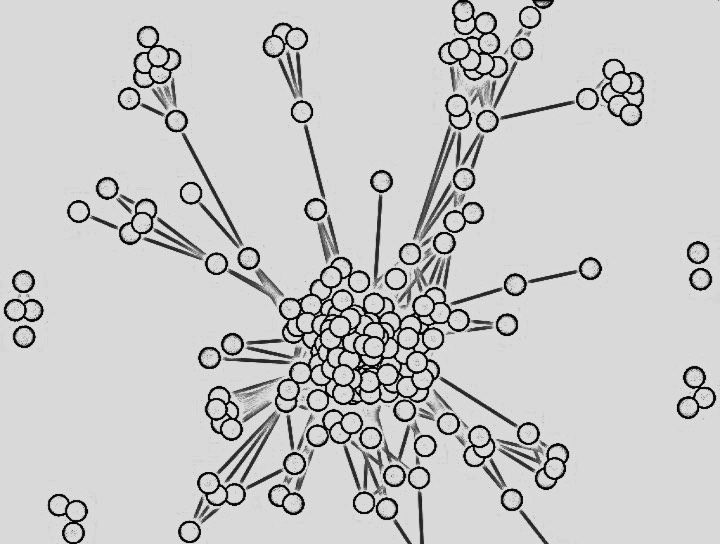


Researchers combine experiments and computational models to reveal how phytoplankton and bacteria cooperate—and compete—to shape global carbon and nitrogen cycles.
Reporting by Helen Hill for CBIOMES
Marine microbes drive Earth’s biogeochemical cycles, yet the microscopic interactions that sustain them remain poorly understood. A new study published in Nature Microbiology brings together researchers from the University of Haifa – Osnat Weissberg, Dikla Aharonovich, and Daniel Sher – with CBIOMES members Zhen Wu and Michael J. Follows. The team combines mathematical modeling with long-term co-culture experiments to uncover how phytoplankton and heterotrophic bacteria influence each other’s survival and, by extension, global carbon and nitrogen cycling.
Phytoplankton such as Prochlorococcus perform nearly half of Earth’s primary production, fixing carbon dioxide into organic matter. But their fate is tightly linked to heterotrophic bacteria, which recycle nutrients and detoxify harmful byproducts. These interactions occur at micrometer scales yet ripple across ecosystems, shaping fisheries, carbon export, and climate feedbacks.
The researchers focused on four hypothesized mechanisms of interaction: overflow metabolism, mixotrophy, exoenzyme activity, and reactive oxygen species (ROS) detoxification. Overflow metabolism occurs when organisms release excess carbon or nitrogen under elemental imbalance. Mixotrophy allows phytoplankton to consume organic compounds alongside inorganic nutrients. Exoenzyme activity enables bacteria to degrade complex organic matter into usable forms. ROS detoxification involves bacteria neutralizing oxidative stress that can kill phytoplankton.
Using controlled co-culture experiments, the team grew Prochlorococcus MED4 with eight diverse marine bacteria under nitrogen-limited conditions. Outcomes ranged from mutualistic “strong” interactions, where both partners thrived, to complete inhibition of Prochlorococcus. These patterns mirrored natural variability observed in the ocean, where some bacteria act as helpers and others as antagonists.
To test whether these dynamics could be explained by metabolism alone, the team built mechanistic models representing each interaction type. They generated thousands of “virtual Prochlorococcus” and “virtual heterotrophs” with randomized traits, simulating millions of pairings. Machine learning classified outcomes into phenotypes – strong, sustained, weak, inhibited, or neutral – based on growth curves.
The results were striking. Overflow metabolism and exoenzyme recycling reproduced most experimental outcomes, suggesting that nutrient remineralization is a dominant force in sustaining phytoplankton under stress. ROS detoxification explained some strong interactions but failed to capture long-term survival under nitrogen starvation. Mixotrophy alone could not account for observed diversity, highlighting that competition for organic matter is insufficient without cooperative recycling.
Loss processes – cell death and leakage – emerged as critical determinants of interaction outcomes. High mortality rates in Prochlorococcus drove rapid decline unless bacteria recycled nitrogen efficiently. Conversely, systems dominated by ROS detoxification were more exploitative: bacteria grew slowly yet provided just enough detoxification to keep phytoplankton alive.
Biogeochemical implications are profound. Simulations show that recycling-based interactions yield higher net community production and nitrogen reuse, echoing patterns in oligotrophic gyres where Prochlorococcus dominates. These models predict substantial production of recalcitrant dissolved organic carbon (RDOC), a key component of long-term carbon sequestration – processes often underestimated in global ocean models.
Representing these mechanisms explicitly is essential for scaling from lab cultures to Earth system models. Incorporating overflow and exoenzyme pathways could improve predictions of carbon export and nutrient cycling in nutrient-poor regions.
The study also underscores gaps in current understanding. Complete inhibition of Prochlorococcus observed in some experiments could not be reproduced by any single mechanism, hinting at allelopathy – chemical warfare between microbes – as an additional factor.
By bridging experiments and computational modeling, this work provides a roadmap for disentangling microbial interactions that underpin ocean productivity.
Publication:
Osnat Weissberg, Dikla Aharonovich, Zhen Wu, Michael J. Follows & Daniel Sher (2025), Models and co-culture experiments assess four mechanisms of phytoplankton bacteria interactions, Nature Microbiology, doi: 10.1038/s41564-025-02196-0